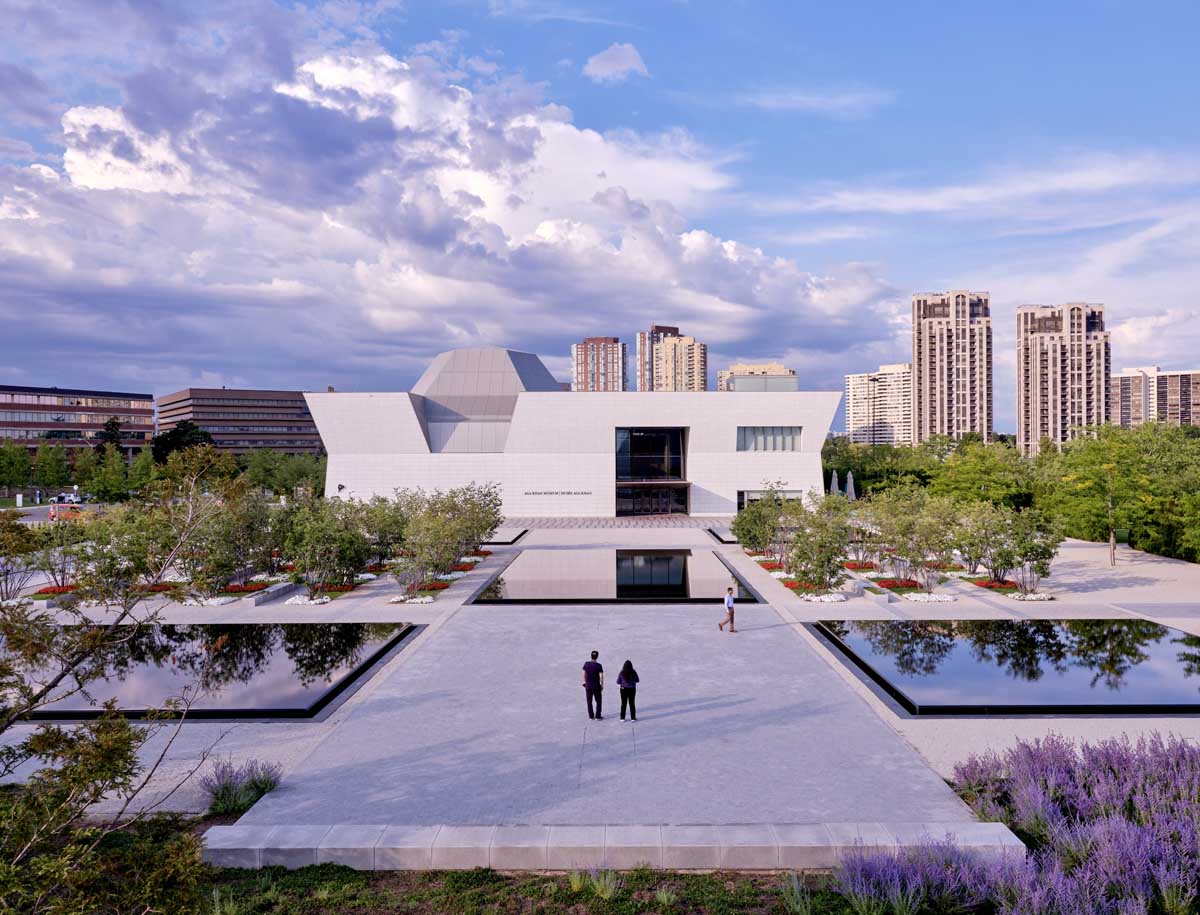
Nestled within a 17-acre park in North York, an eye-catching, luminous structure rises above the highway: the Aga Khan Museum. Designed by Toronto-based architects Moriyama & Teshima—well-known to fashion lovers for the shoebox-shaped Bata Shoe Museum—the building is as captivating on the outside as it is on the inside.
The architecture is centred around the movement of light. Angled 45 degrees to solar north, the structure exposes all sides to sunlight throughout the day. As visitors walk toward the central courtyard, they can admire intricate patterns reflected along the walls through the building’s glass façade. Inspired by the traditional mashrabiya motif, these designs shift throughout the day depending on the sun’s angle and the weather, creating an ever-changing play of light.
Inside, the Museum features four exhibition galleries and a state-of-the-art auditorium, all dedicated to celebrating Muslim art and cultures. While its mission is to foster intercultural dialogue, its programming spans both contemporary and historical art—along with family-friendly performances, workshops, and community activities.
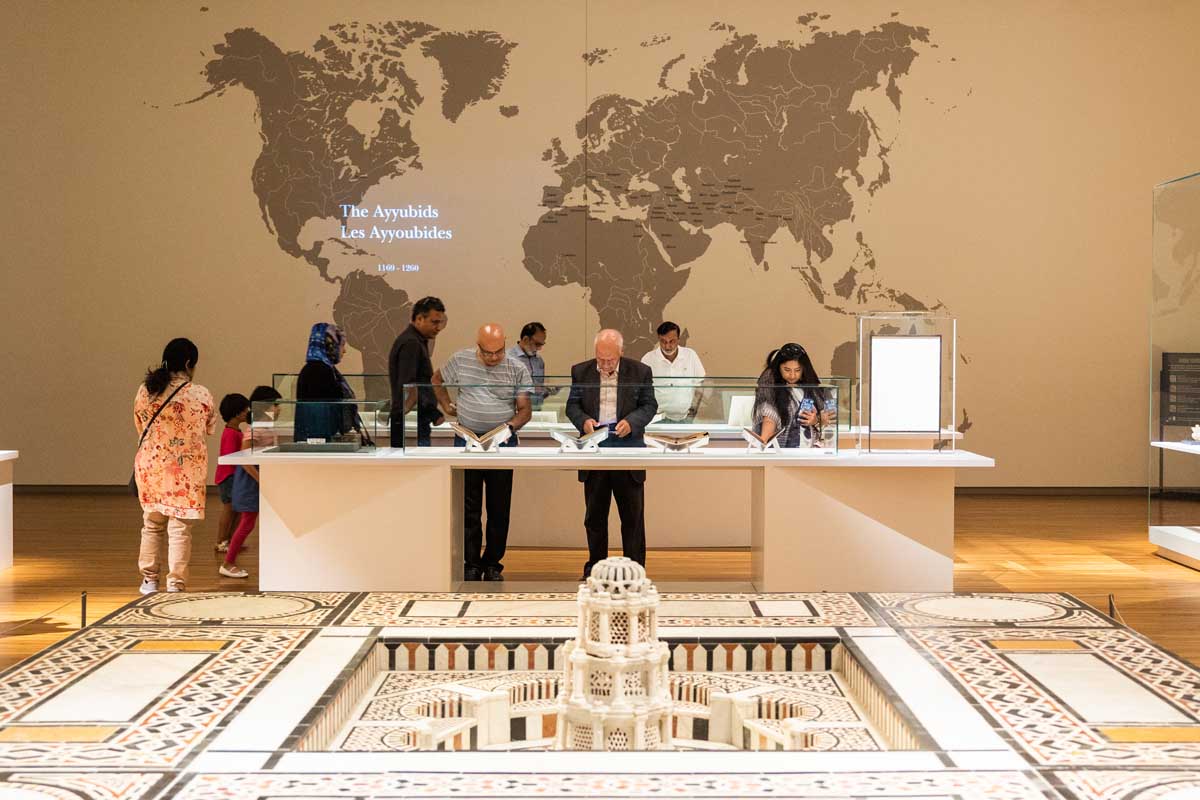
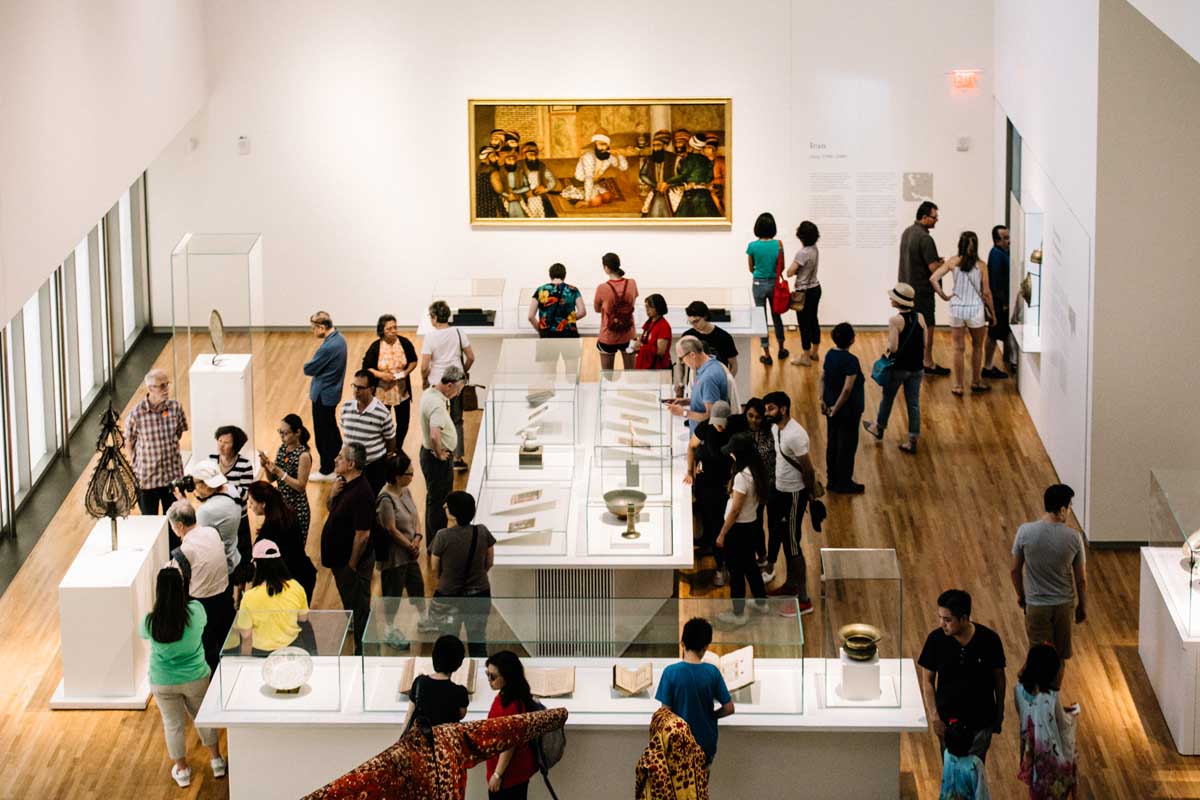
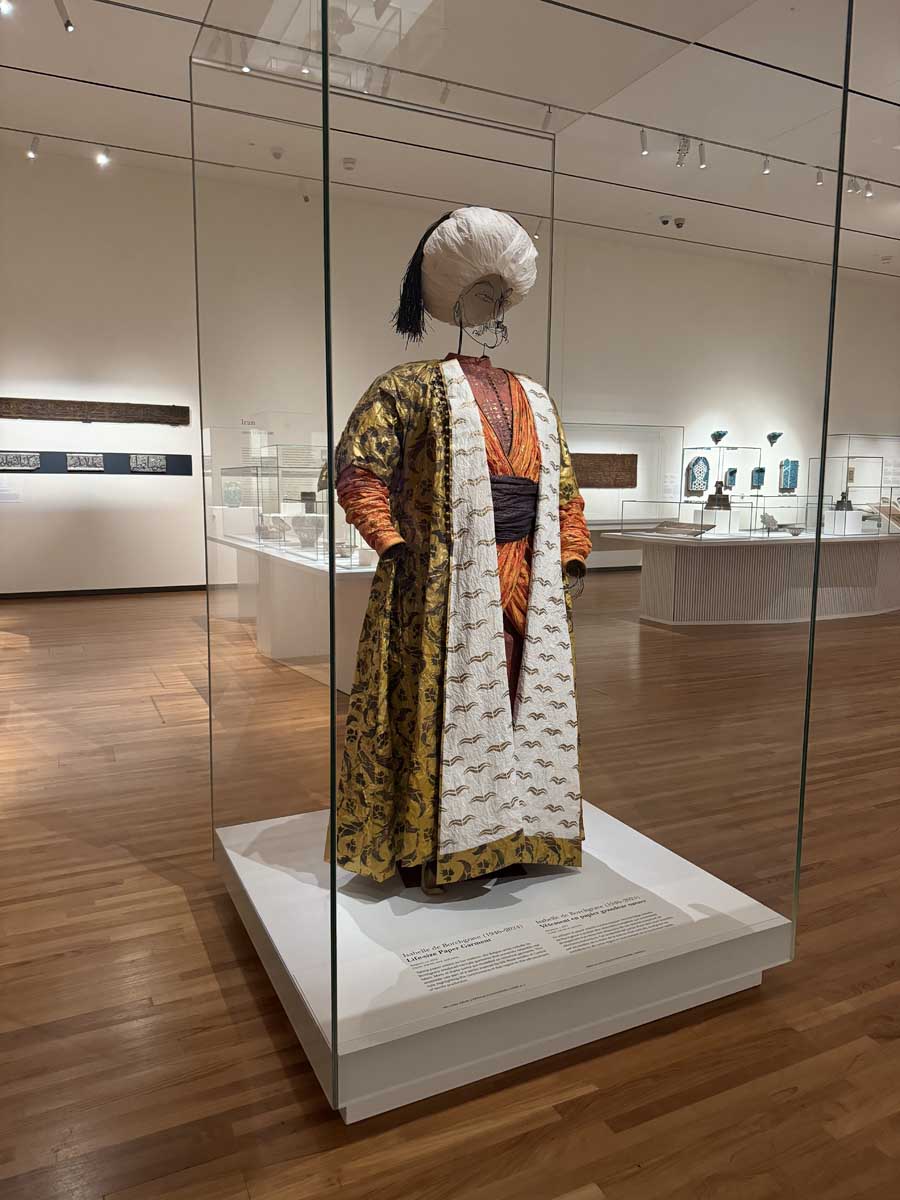
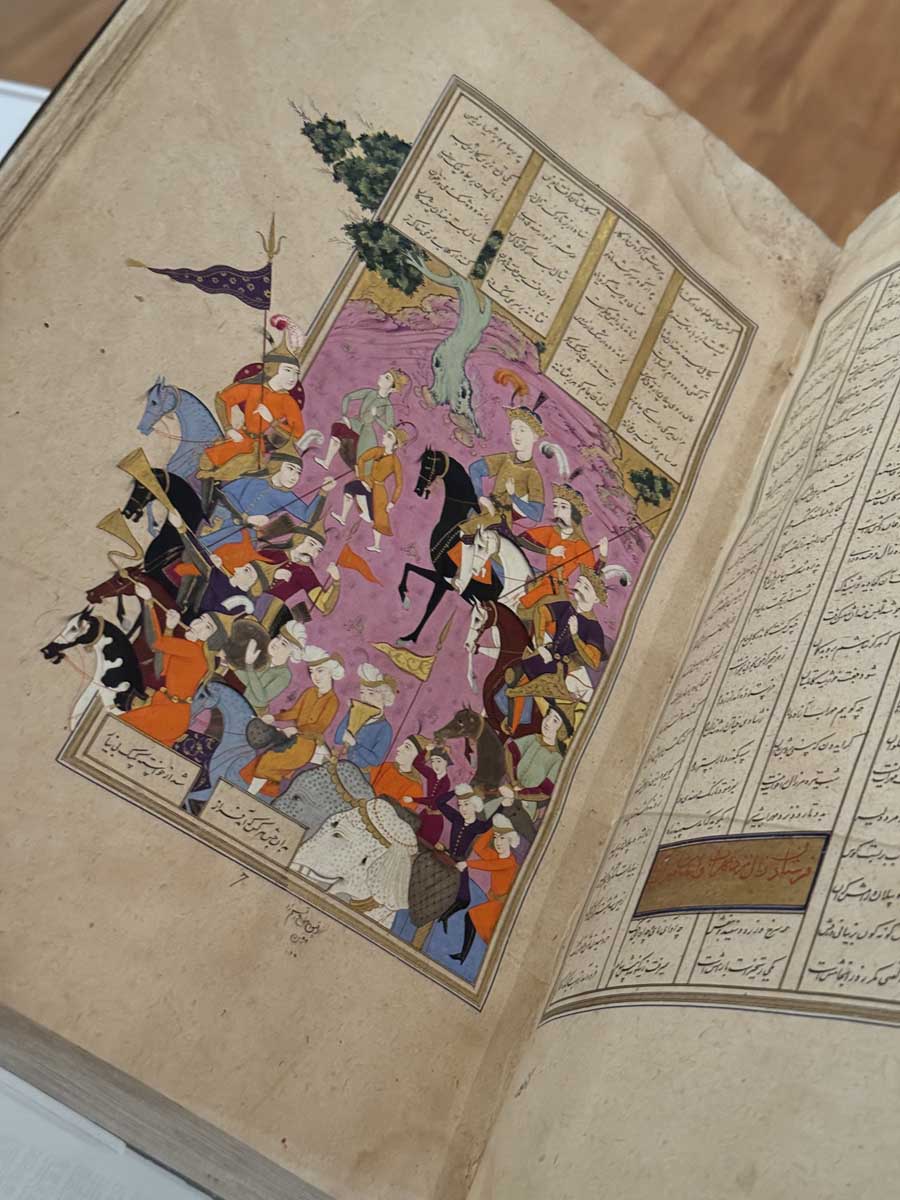
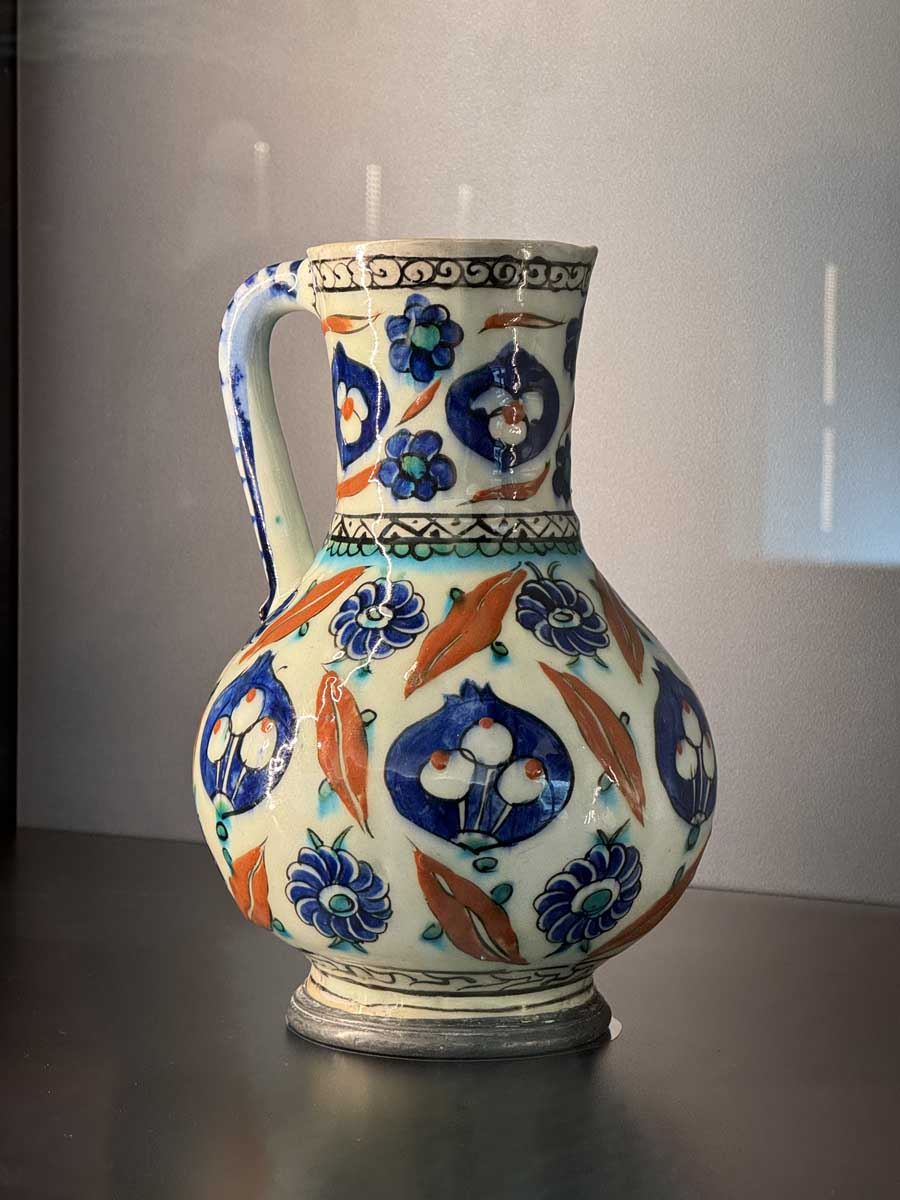
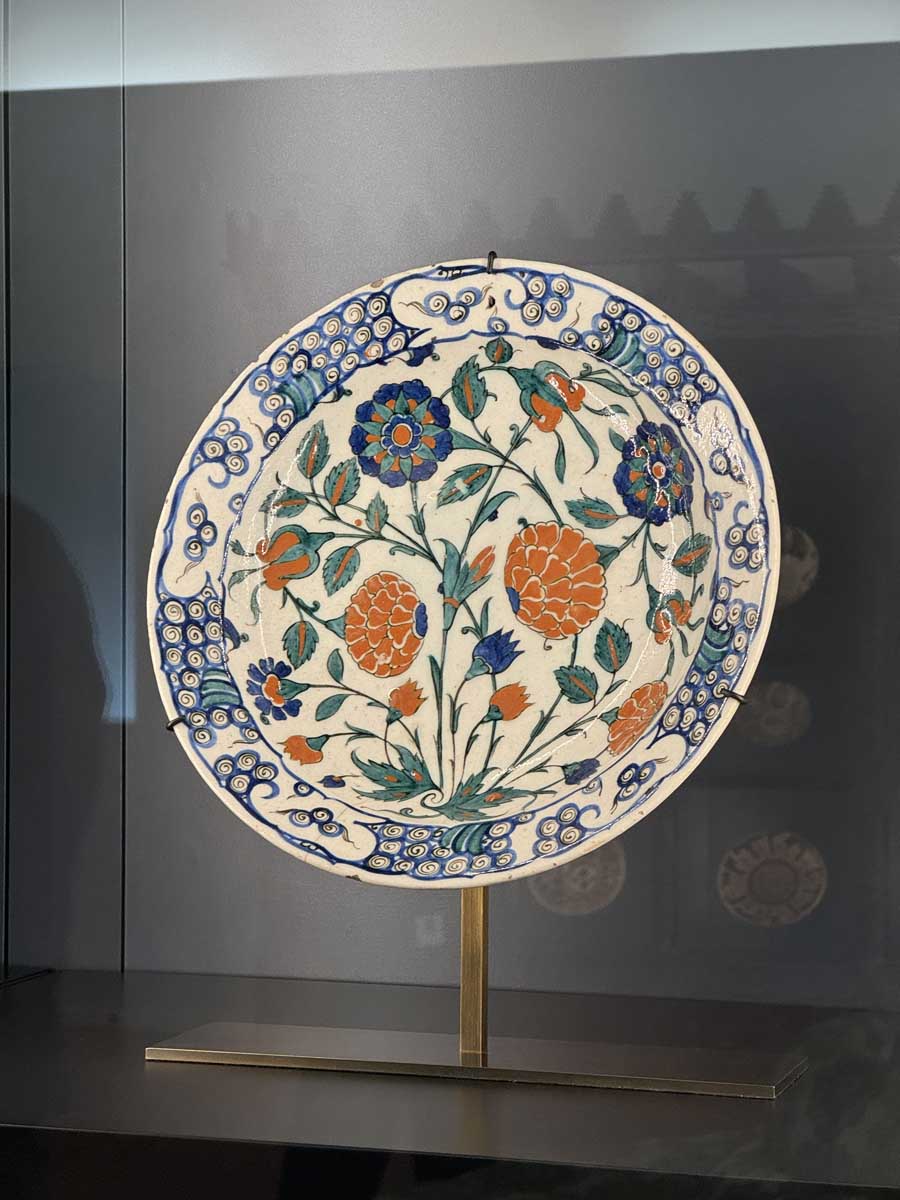
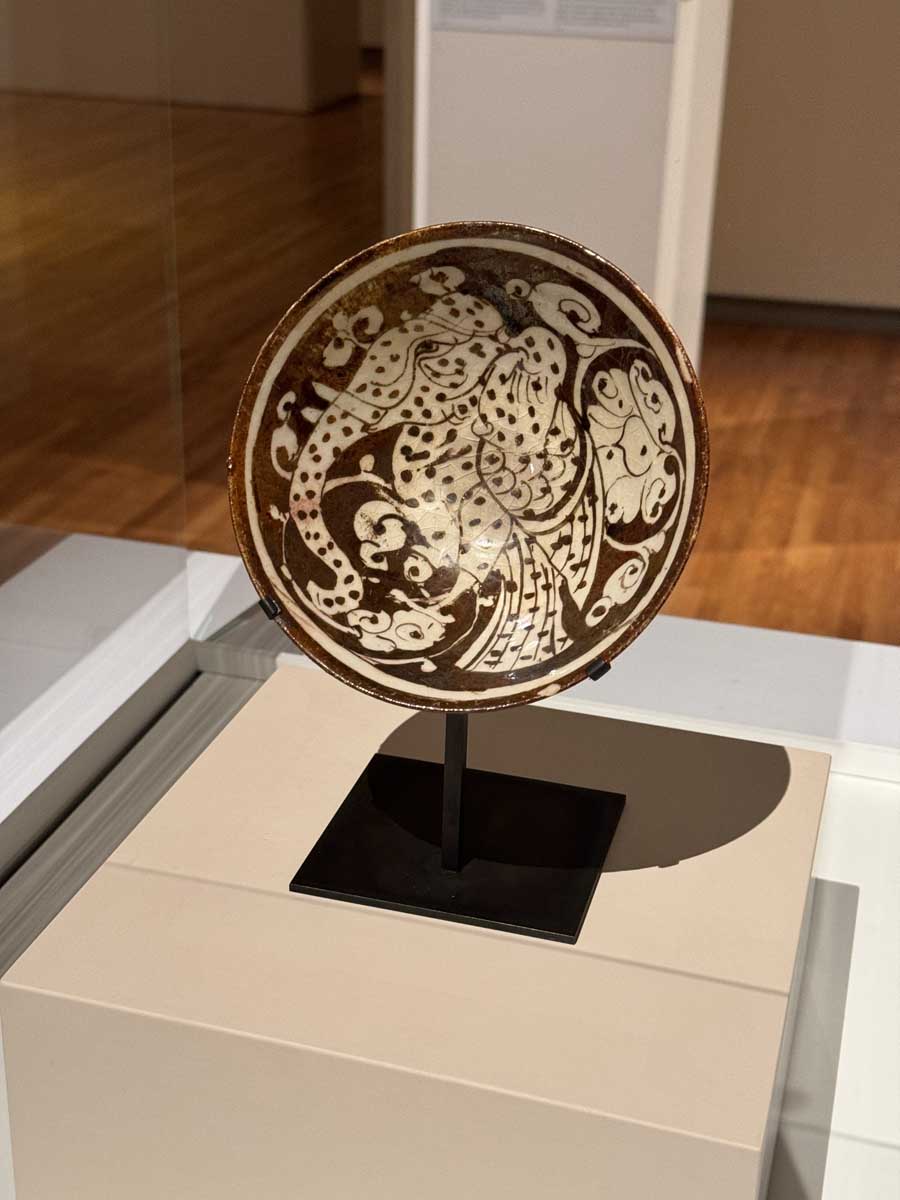
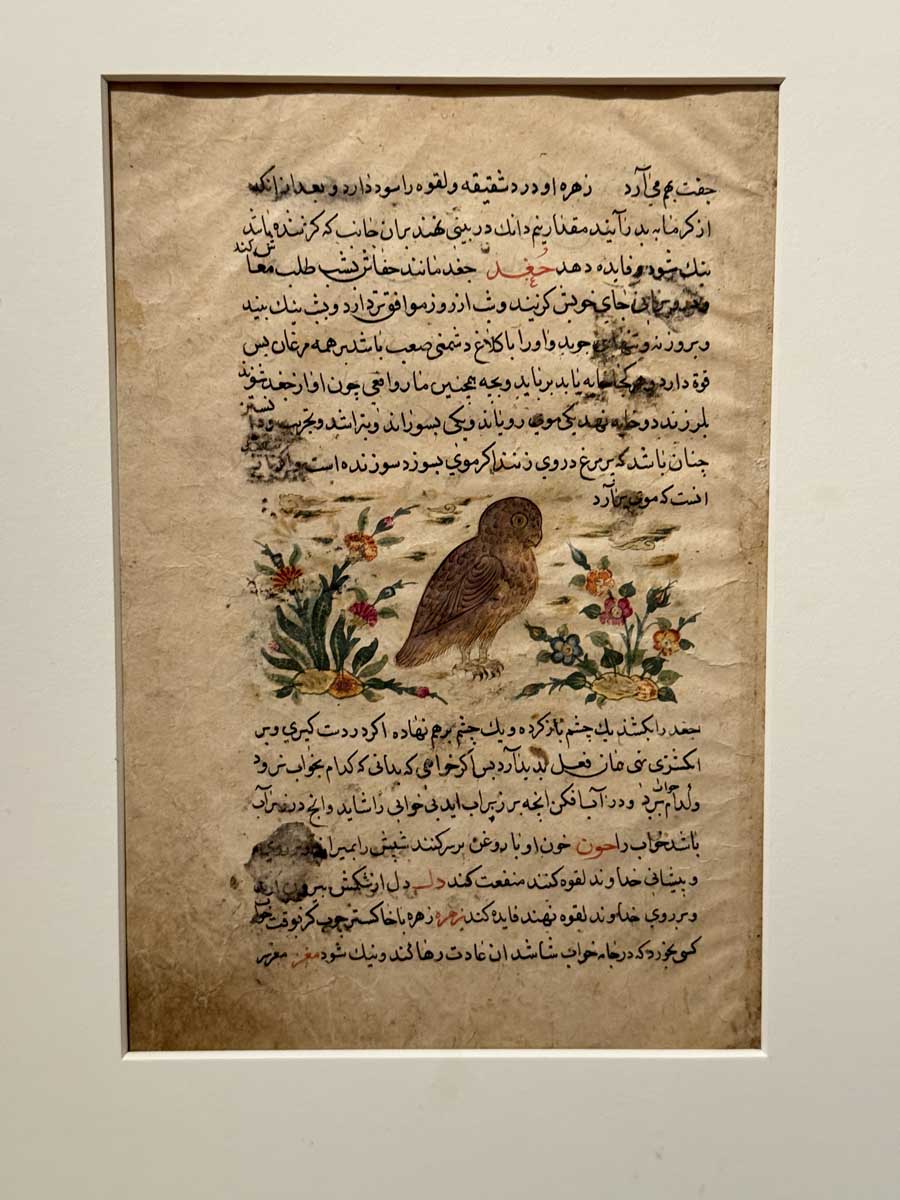
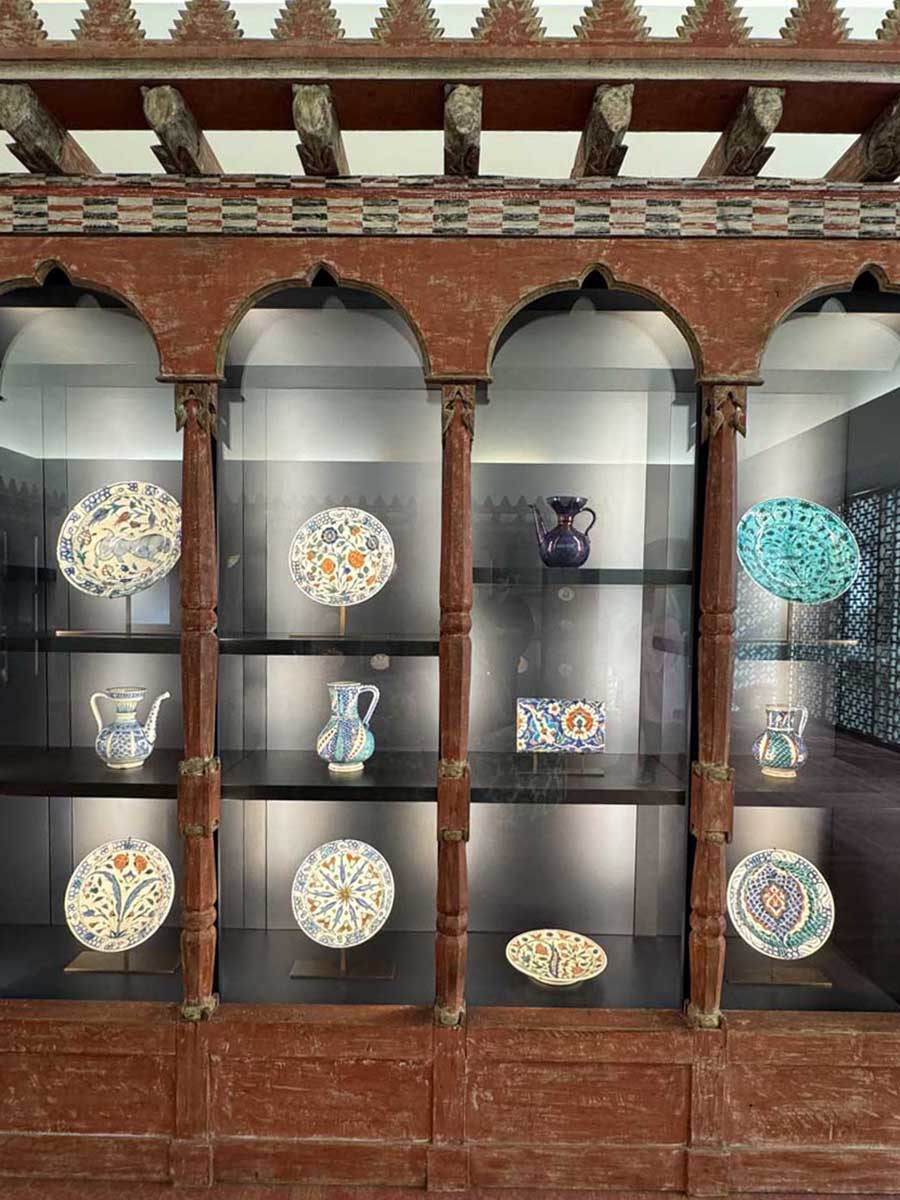
The Museum’s permanent collection draws heavily from the personal holdings of the Aga Khan family, complemented by ongoing acquisitions. Today, the institution proudly houses more than 1,200 objects—including manuscripts, paintings, ceramics, and textiles—spanning the 9th to 21st centuries and stretching geographically from Spain to China. These pieces reflect the diverse regions shaped by Muslim cultural influence.
Currently, the Museum Collections Gallery showcases a “permanent” display—though, as FAJO learned, “permanent” is relative. The works on view will rotate in six months, and those removed will not reappear for at least five years due to conservation and preservation concerns. In other words, what visitors see now is truly special. Two standout highlights include:
- Aisha Khalid’s Your Way Begins on the Other Side — a monumental tapestry composed of over one million gold-plated steel pins embedded in layers of silk and velvet (on view until April 26, 2026).
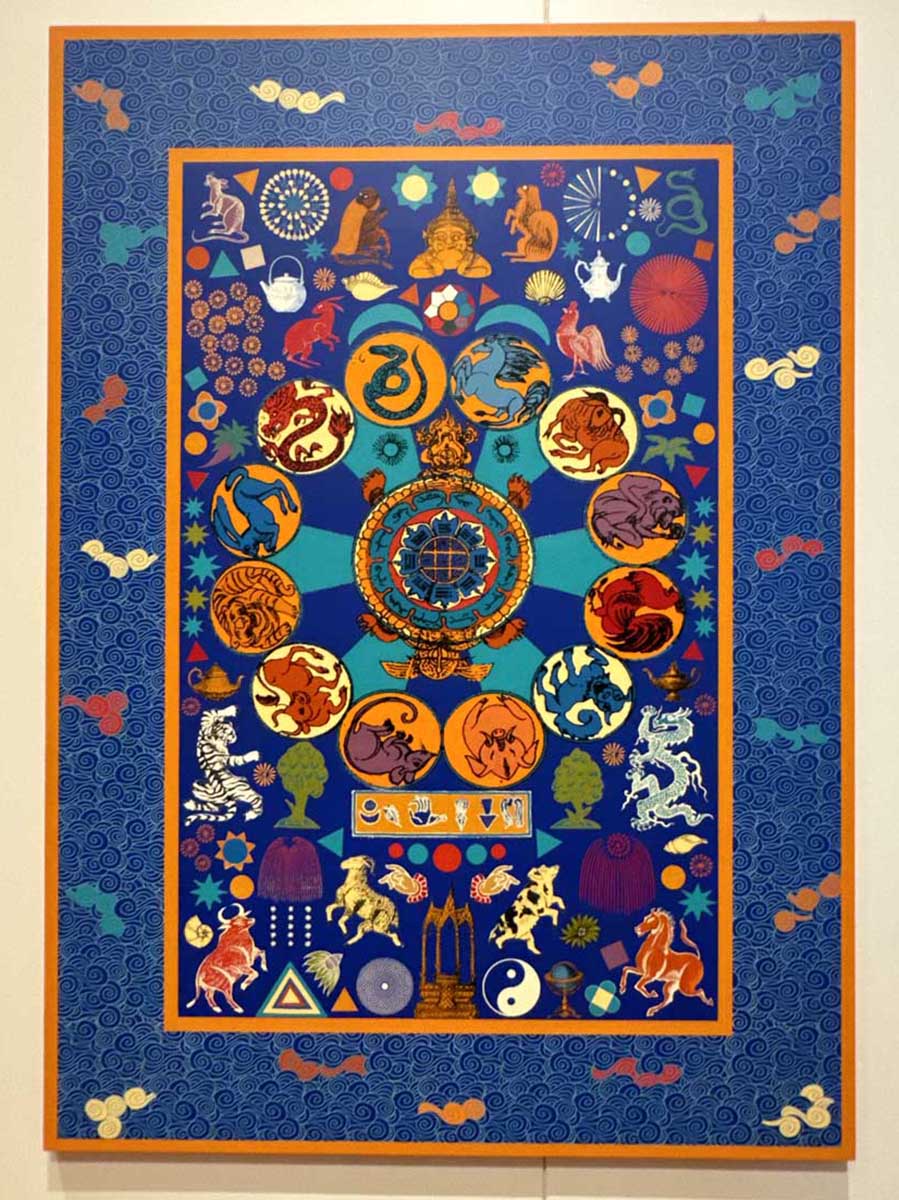
- Kour Pour: Cosmic Diagrams — a vibrant installation bridging East and West Asian artistic traditions (on view until February 22, 2026).
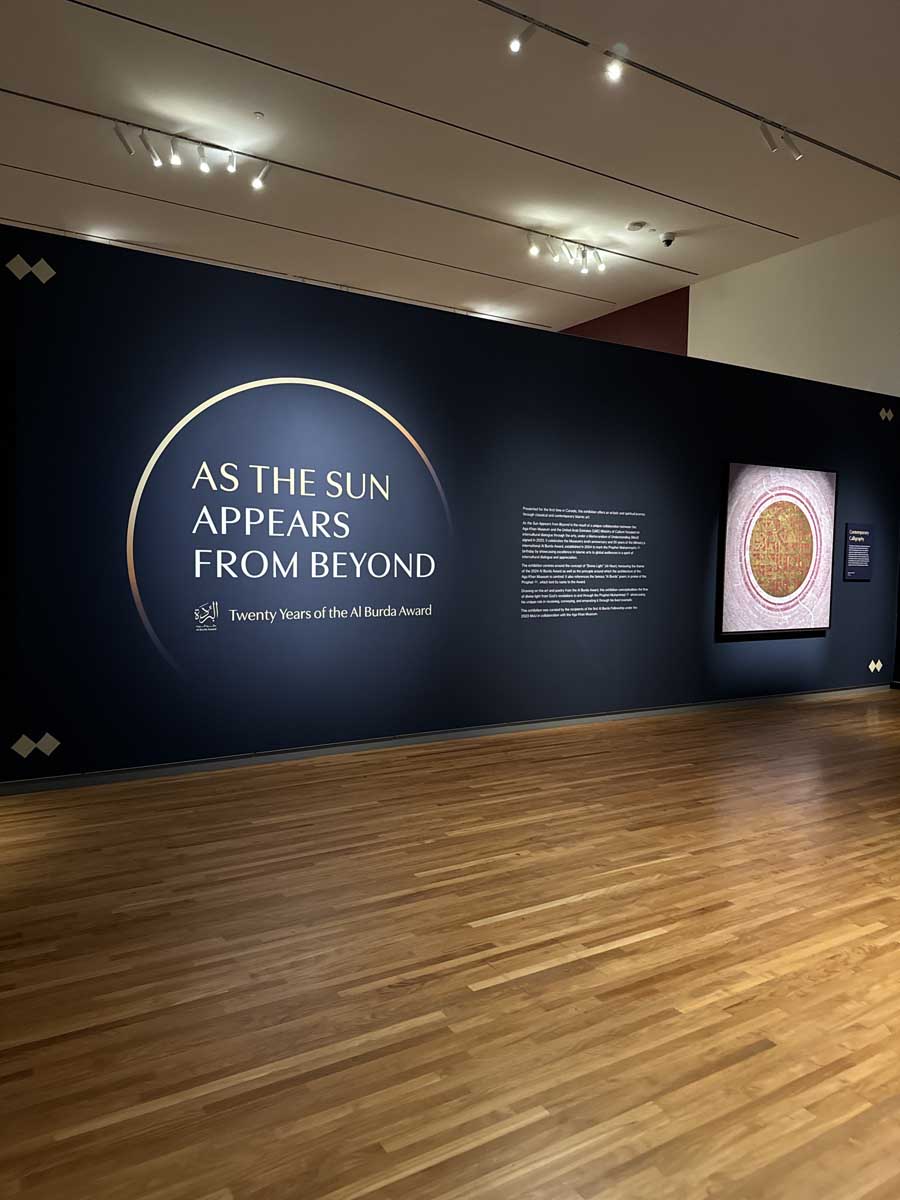
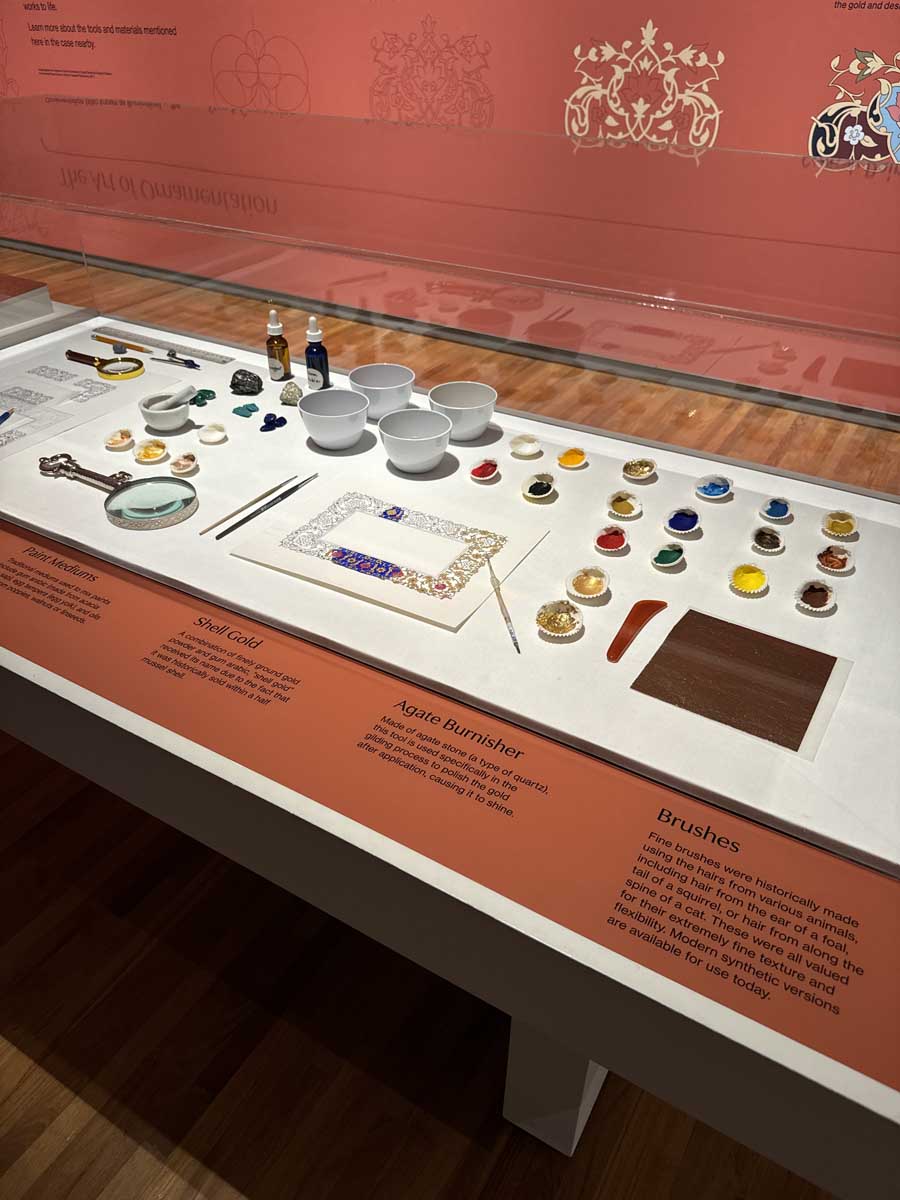
On the second floor, the exhibition The Sun Appears from Beyond: Twenty Years of the Al Burda Award showcases both classical and contemporary works of Arabic calligraphy, poetry, and ornamental design. Visitors are even invited to try their hand at creating their own patterns.
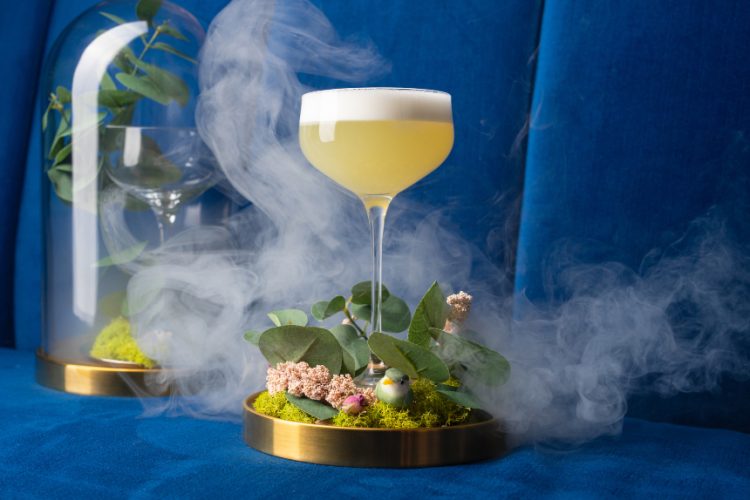
After a day of cultural exploration, guests can unwind at Diwan, the museum’s acclaimed restaurant. The cuisine—Middle Eastern, North African, and South Asian dishes crafted by Canadian celebrity chef Mark McEwan—is exceptional. Equally impressive is the space itself: the walls are adorned with ornate wooden panels, hand-carved and painted in 1799, originally from a private Damascus home. We tried the lamb shank with baba ganoush, paired with a “Princess of Persia” cocktail, and it was a memorable gastronomic experience.
Between Christmas Day and New Year’s Eve, the Museum will host a variety of special activities. A highlight is Light Up the Dark, the annual outdoor light festival. From December 27 to 29, the museum’s front façade will transform with animated projections created by students and graduates of OCAD University’s Experimental Animation program, inspired by pieces from the Museum Collections and current exhibitions.
For full event details, workshops, and masterclasses, visit the Museum’s website.
Photography courtesy of the Aga Khan Museum and Darina Granik.








Join In On The Conversation!