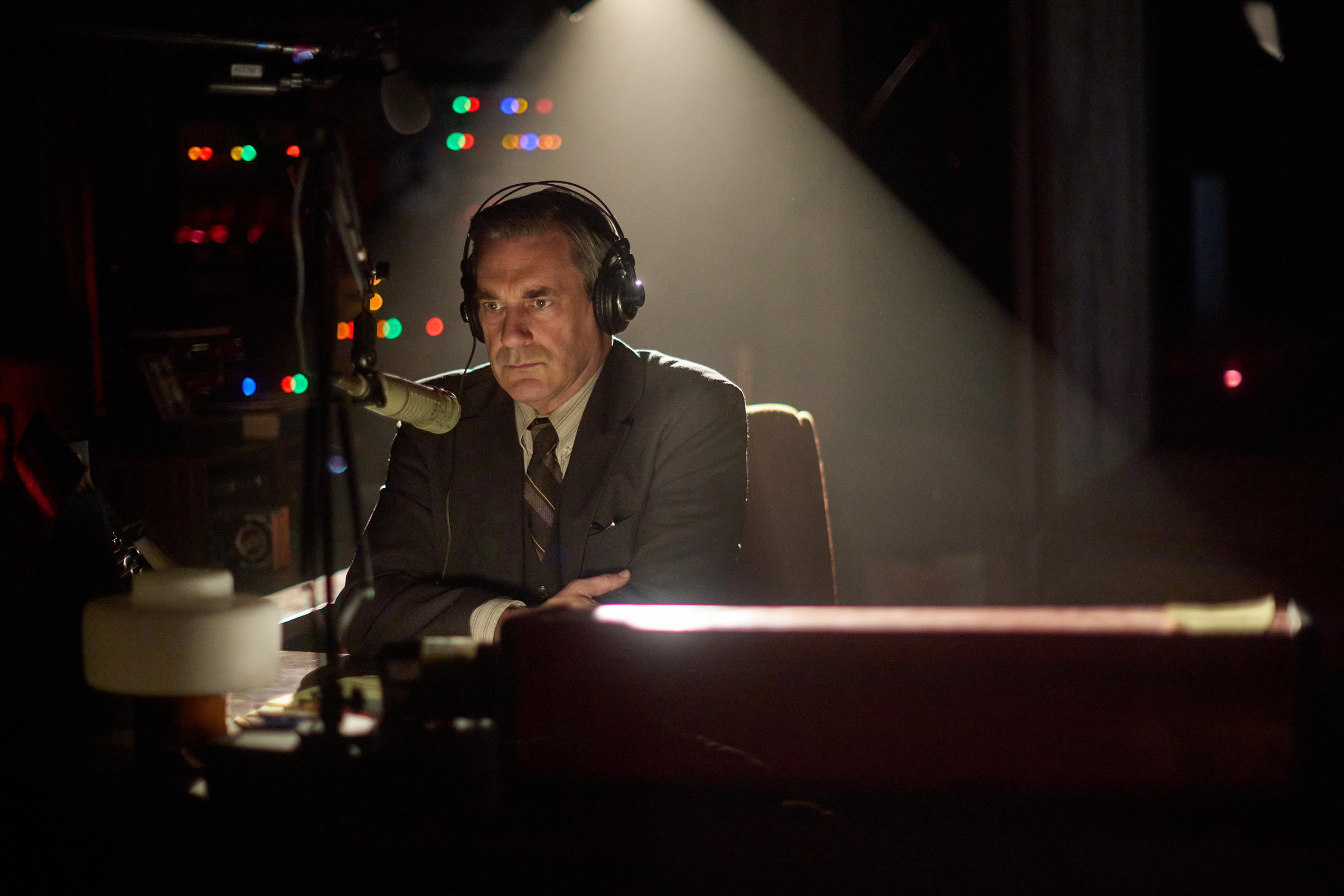
Starring Jon Hamm and Giovanni Ribisi, the new series American Hostage made its world premiere at TIFF on Saturday. Based on remarkable true events, the tense drama explores journalistic responsibility, public trust and the complicated relationship that develops between a reporter and the man at the centre of a dangerous standoff.
A lot has changed in the journalism industry, and the world itself, since the ’70s. Yet, despite the challenges of technology, global conflict and general instability, some things remain the same. This is why American Hostage may feel like a trip back in time, while still staying relevant and very pertinent to our lives.
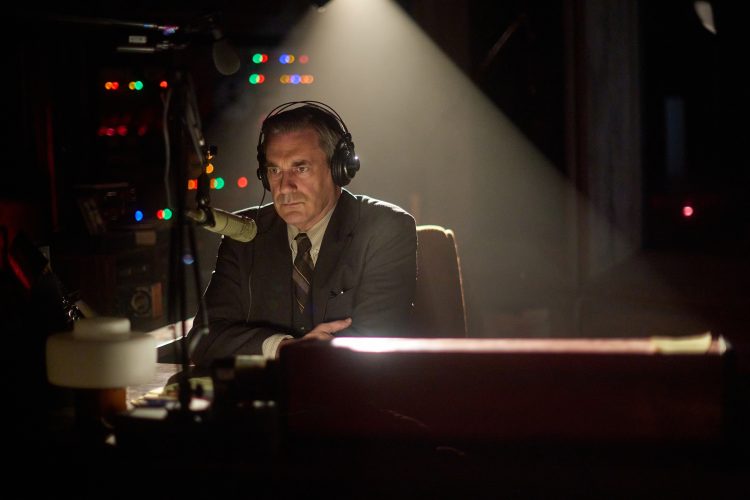
Set in Indianapolis in 1977, the film follows a respected local radio reporter Fred Heckman (Jon Hamm), whose trusted voice has made him a familiar presence in the homes of listeners throughout the city. Riding on his multi-decade success, Heckman is starting to nevertheless get bored and is contemplating a possible move to New York for a bigger show. While he weighs in what this could mean for his career, family and current colleagues, his questions are abruptly pushed aside when Tony Kiritsis (Giovanni Ribisi), a financially desperate local man, takes a mortgage broker hostage and asks to speak with Heckman live on the radio.
This is where Hamm showcases pure journalistic excellence, by putting public good above all broadcast rules, regulation or even logic. Subsequently, however, he puts himself in an extraordinary position of responsibility that now not only weighs on him but his entire crew at the show. Heckman continues to remain calm, talking to Kiritsis and guiding the conversation. However, in the process, the lines start to blur as he can no longer function solely as an observer. Heckman is inadvertently becoming part of the story he is covering.
This tension is at the heart of American Hostage. What responsibility does a reporter have when police and lawyers consistently control the situation? Can informing the public intensify a crisis? And how can a journalist help save a human life?
The series is set decades before breaking news became instantly accessible through smartphones, social media and continuous live coverage. Watching reporters phone in their stories using landlines and capturing interviews on analogue voice recorders is a striking reminder of how dramatically journalistic technology has evolved.
Yet the limitations of the period also give the story a particular intimacy. People wait for the radio broadcast. They listen together. Heckman’s voice carries enormous weight because his audience cannot immediately turn to countless competing sources for information. Their reliance on him reinforces one of the series’ most compelling themes: trust in journalism is both immensely powerful and extraordinarily fragile. Especially in a medium-sized town.
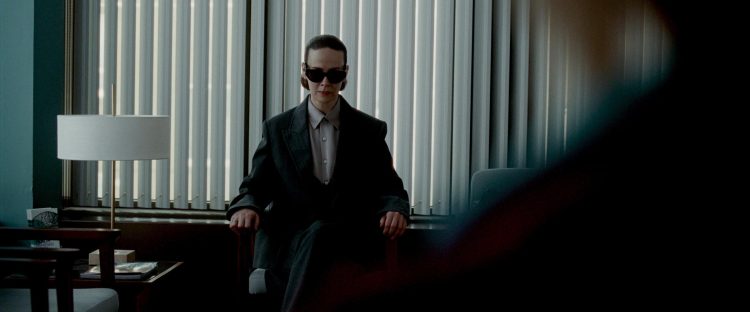
The production captures the period beautifully. Filmed in Winnipeg, sometimes in the thick of winter, the series convincingly recreates 1970s Indianapolis. The sets, costumes and props are exceptionally detailed, with the camera frequently lingering on the characters’ surroundings. Radio equipment, vinyl records, newspapers, desk phones, room décor, cigarettes and small household objects all help build a fully realized world. These details establish the period but also create an environment that feels lived in, allowing viewers to experience the story through the physical objects the characters use to communicate, work and understand what is happening around them.
Jon Hamm is spectacular as Heckman. He brings authority, composure and warmth to a man whose career was built on being trusted. Giovanni Ribisi is equally spectacular. His portrayal of Kiritsis is volatile, unpredictable and deeply human. Ribisi captures the character’s anger and desperation while showing the vulnerability underneath them. It is a demanding performance that could easily have become exaggerated, but Ribisi gives Kiritsis emotional depth without diminishing the seriousness of his actions.
The scenes shared by Hamm and Ribisi are particularly gripping. Even when their characters are communicating only by telephone, the connection between them feels immediate. Hamm’s restraint provides an effective counterpoint to Ribisi’s intensity, with each actor strengthening the other’s performance.
Supporting cast is equally powerful: Kristoffer Polaha shines as Dick Hall, while June Laporte, Kat Cunning and William Jackson Harper’s characters are deeply multi-dimensional. Meanwhile, Canadian actor Joe Cobden provides top-notch entertainment and the needed stress-relief in his role as the station manager.
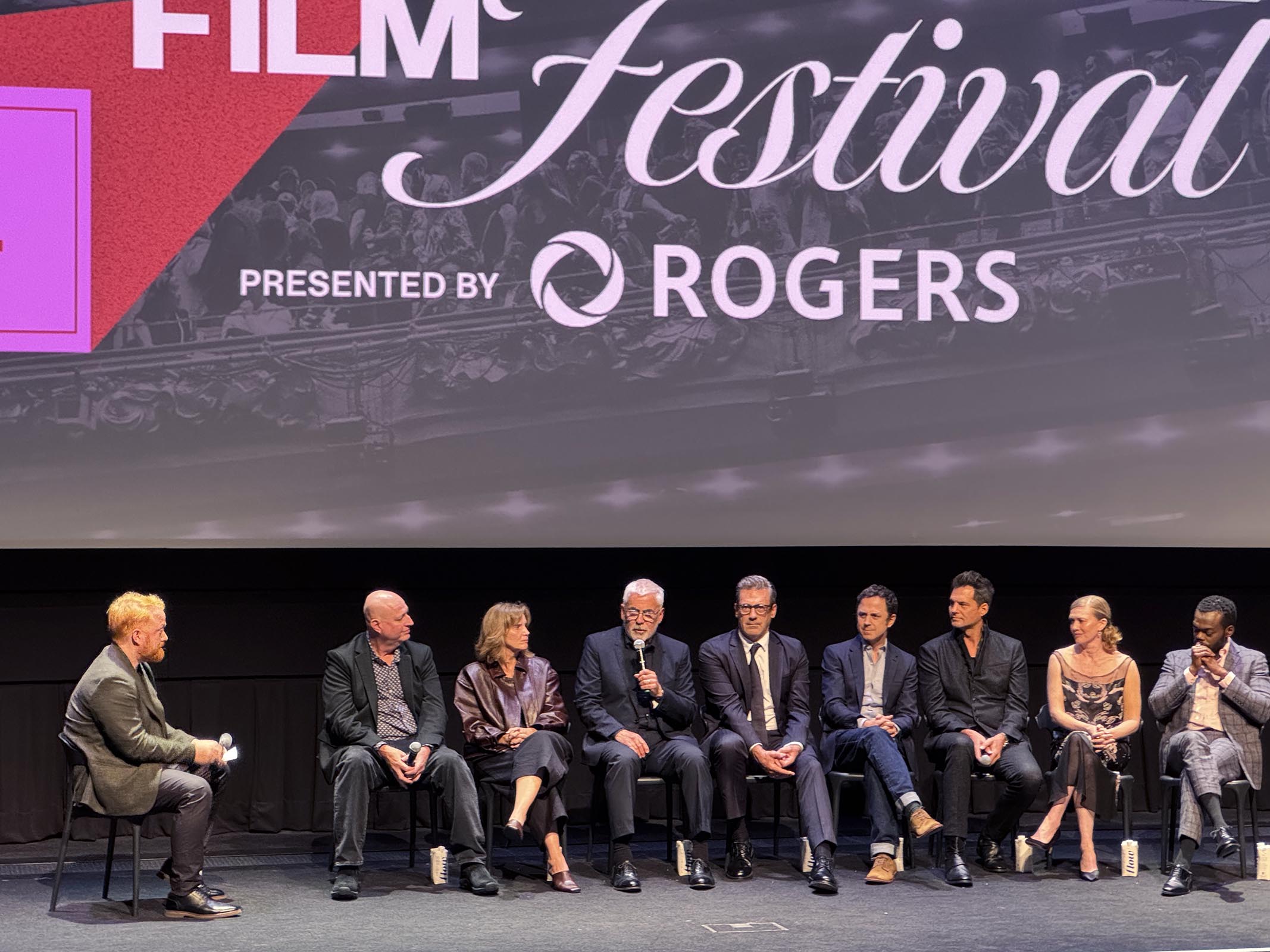
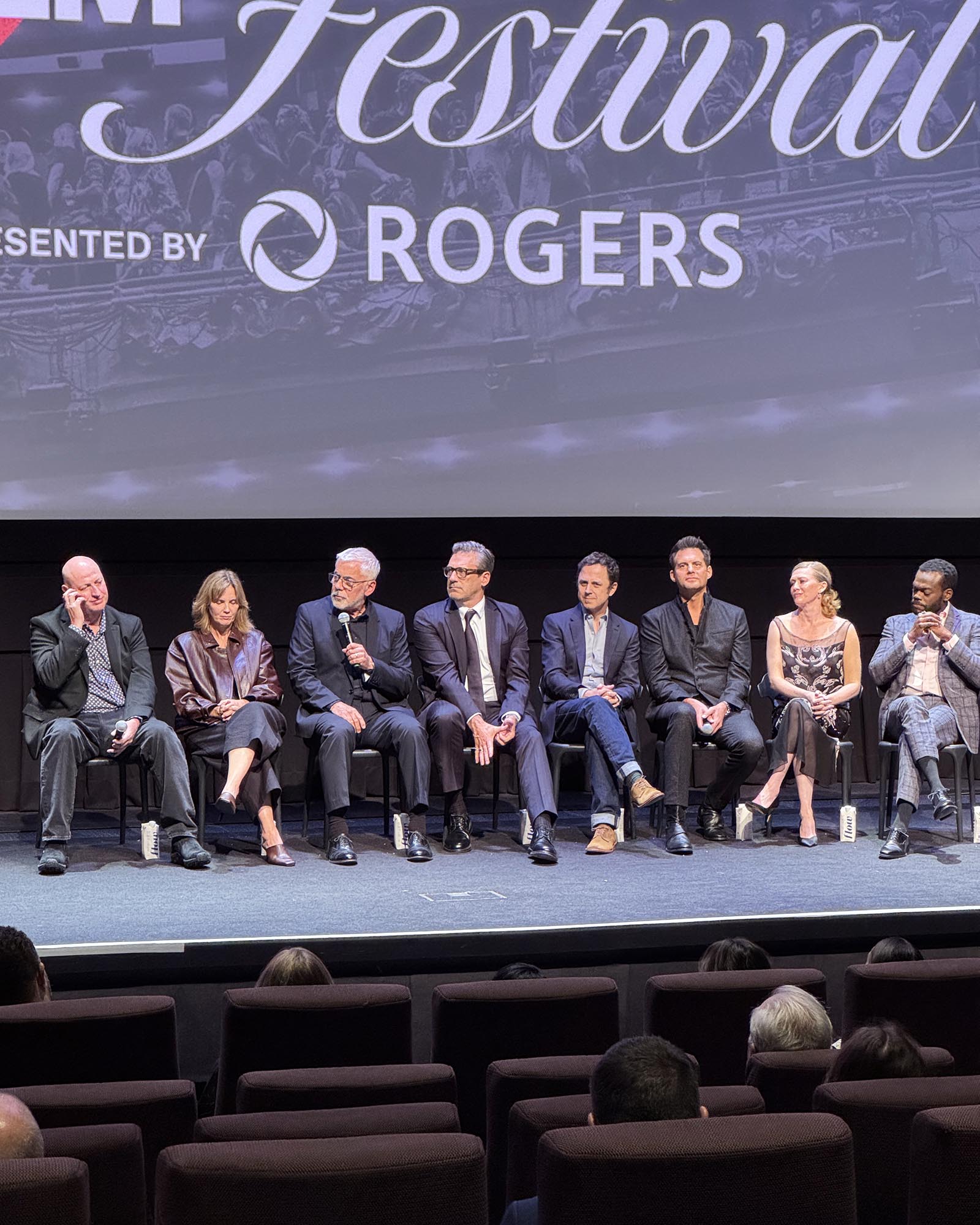
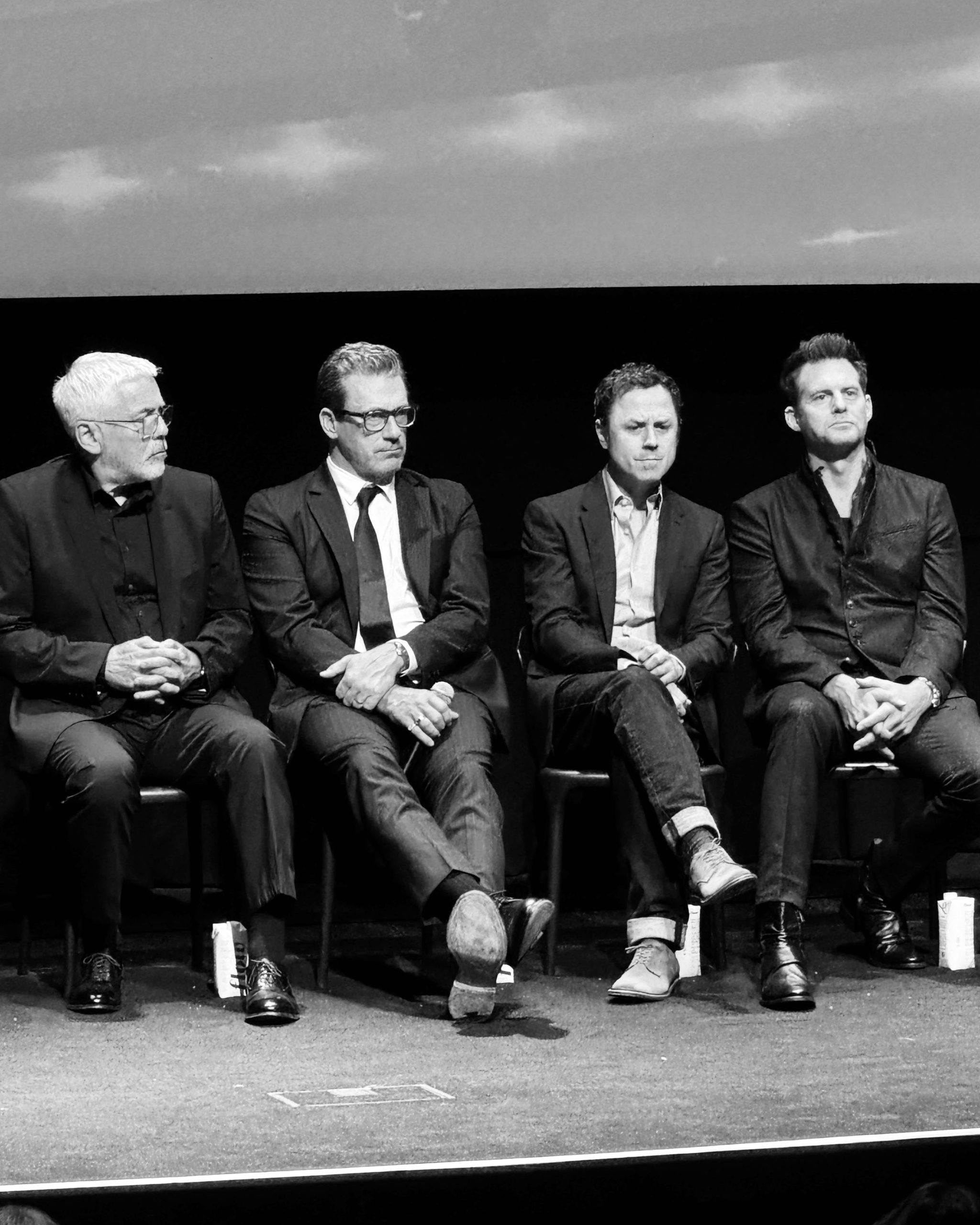
Many members of the cast and crew attended the World Premiere of the series in-person and were in the theatre during and after the screening, both on-stage and in the audience.
With outstanding performances, meticulous period detail and a fascinating examination of journalistic responsibility, American Hostage is an absorbing and highly promising series. Its greatest strength is not simply the extraordinary true story it recounts, but the way it examines the human relationships that journalists can create.
Photography by Hannah Yakobi and courtesy of TIFF.







Join In On The Conversation!