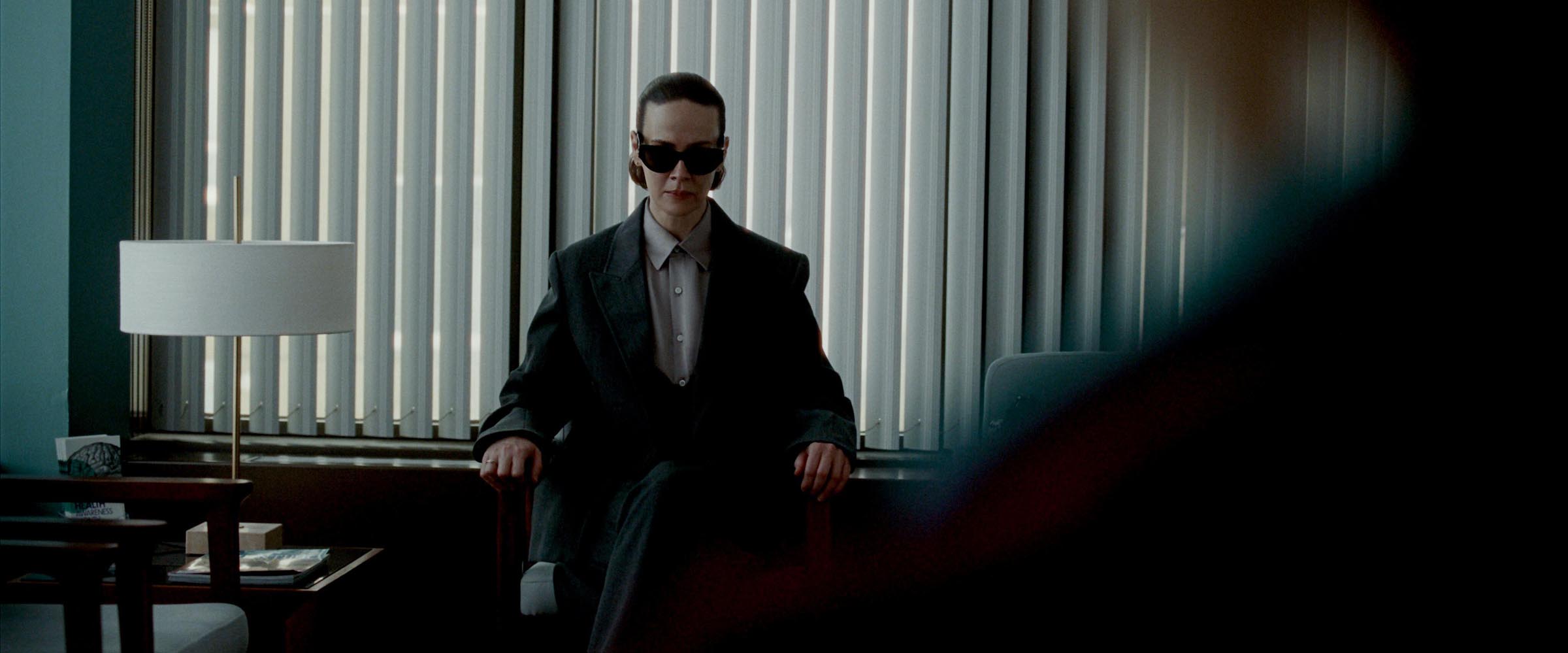
Cody Fern’s feature directorial debut, Closing Night, had its world premiere at the Toronto International Film Festival last night, bringing together an exceptional cast led by Sarah Paulson, Naomi Watts and Dianne Wiest for an intimate and deeply emotional exploration of family, illness and the complicated histories that bind us together.
Co-written by Fern and Devon Bostick, Closing Night follows Sandra Vale (Paulson), an internationally renowned actress preparing for the opening night of her Broadway play. After decades of estrangement, she invites her family back into her life, including her sister April (Watts), and what begins as an already uneasy reunion quickly forces the family to confront wounds that have remained unresolved for years.
At its heart, Closing Night is a story about family in all of its complexity. It examines resentment, love, anger, guilt and the difficult reality that the people closest to us can sometimes be the people with whom we carry our deepest wounds. The film does not attempt to simplify these relationships. Instead, it allows them to remain messy, uncomfortable and deeply human.
Despite the weight of its subject matter, Closing Night is also unexpectedly funny. Intricate moments of humour are woven throughout some of the film’s most difficult conversations, offering just enough levity without diminishing their emotional impact. It is a delicate balance, but one Fern handles remarkably well. The humour feels natural to the way families often navigate pain: sometimes laughter appears in precisely the moments when there is very little else left to do.
Paulson gives what may be one of the best performances of her career. Sandra is complicated, guarded and often difficult, yet Paulson finds the vulnerability beneath those layers. Her performance moves effortlessly between sharp humour, anger, fear and devastating tenderness, sometimes within the same scene.
Watts is equally exceptional as April. The relationship between the two sisters becomes the emotional centre of the film, and Watts brings enormous depth to a woman carrying decades of hurt. Opposite Paulson, the two actresses create a relationship that feels lived-in despite the years separating their characters. Their confrontations are intense, but some of their quieter moments are equally powerful.
Dianne Wiest brings tremendous warmth and emotional weight to the family dynamic, while Toby Wallace and Odessa A’zion add another generation to a story largely shaped by what families inherit from one another. Wallace, as Sandra’s nephew Theo, brings sensitivity and curiosity to his relationship with an aunt he barely knows, while A’zion delivers another compelling performance within an ensemble where every character contributes something meaningful to the larger family portrait.
Fern’s direction is remarkably assured for a feature debut. Rather than allowing the film’s heavier themes to overwhelm the story, he creates space for the characters to breathe, argue, laugh and simply exist together. The cinematography is equally striking, beautifully framing both the theatrical world surrounding Sandra and the much more intimate drama unfolding within the family.
The film explores several mature and emotionally challenging subjects, including abortion, serious illness, mortality and the extraordinarily difficult decisions that families sometimes have to navigate together. Yet these subjects are approached with considerable thought and humanity rather than simply being used for dramatic effect.
Perhaps one of the most compelling elements of Closing Night is how easily it encourages audiences to turn inward. Beneath the specific circumstances of this family are questions many viewers may recognize in their own lives. How long can resentment survive? What happens when years pass without reconciliation? How well do we truly know the people we love? And when circumstances suddenly make time feel finite, which grievances still matter?
It is an incredibly emotional piece and certainly not for the faint of heart. At times, it is difficult to watch precisely because its conversations about family, illness and mortality feel so intimate and recognizable. But the heaviness is continuously balanced by humour, tenderness and moments of genuine connection.
With impeccable performances, beautiful cinematography and a thoughtful examination of complicated family relationships, Closing Night is a captivating experience and one of the standout films of TIFF 2026 so far. Paulson and Watts are extraordinary individually, but together they give the film its beating heart.
It is a film that stays with you after the credits roll, not only because of what happens to this particular family, but because it quietly asks you to consider your own.
Content advisory: Closing Night deals with mature and potentially distressing themes surrounding reproductive choices, serious illness, mortality and end-of-life decisions. Viewers who may be particularly sensitive to these subjects should take this into consideration before watching.
Photos by Ada Yakobi and courtesy of TIFF.

















Join In On The Conversation!